GrammarBound Sign in
England’s grammar-school catchments

Find out if your postcode gets your child into a grammar school

Check grammar-school catchments across England.

Understanding catchments

What is a grammar school catchment area?

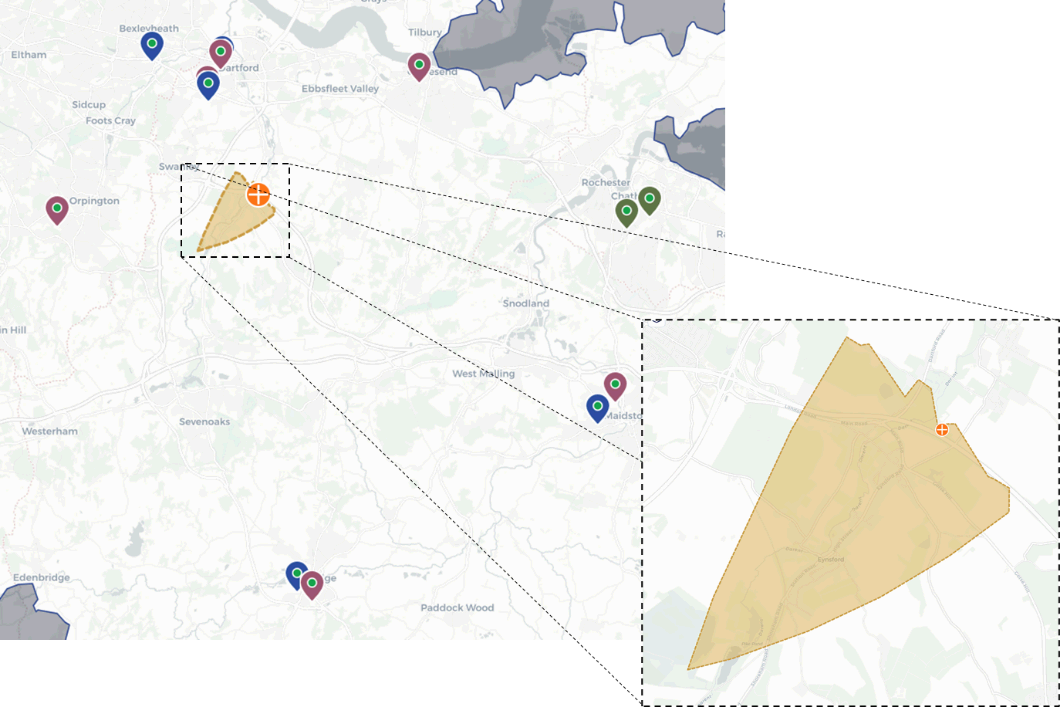
It's the geography a grammar school's admissions are decided on — and where you live can decide whether your child is eligible. There are two kinds, and most catchment websites get them wrong by drawing a simple circle.

Named-area catchments

Some schools give priority to named wards, parishes or districts. The boundary is those real areas — not a radius.

Distance catchments

Others simply admit the children who live closest — out to the furthest distance offered a place that year.

Real boundaries, not estimates

Two homes the same distance from a school can fall on opposite sides of the line. GrammarBound maps the actual boundary.

Every catchment is built from the school's published admissions policy — then checked by hand.

  • 163 grammar schools in England
  • Mapped from official policies
  • Human-verified

Named areas come from Office for National Statistics boundary data; distances from the latest admissions round; school details are cross-checked against Department for Education and Ofsted data. Search your postcode above to see the grammar schools you'd be in line for.

How it works

From postcode to shortlist in three steps

  1. Search your postcode

    Drop a pin anywhere in England and see every grammar school's real catchment drawn around it.

  2. Check your eligibility

    Instantly see which schools you're in catchment — or in line — for, using the actual boundaries, not straight-line estimates.

  3. Compare and plan

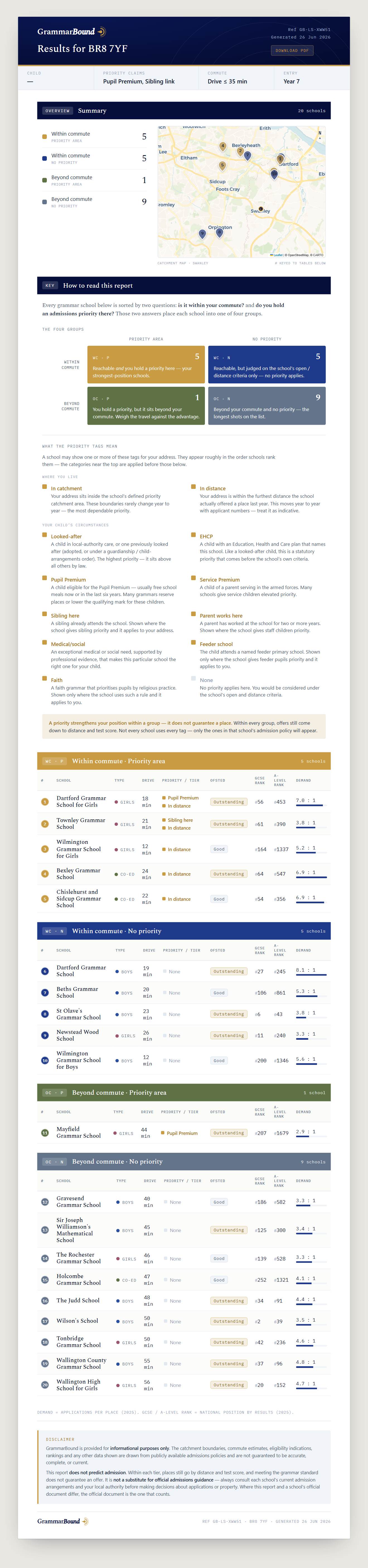
    Weigh up Ofsted grades, exam results, distance and commute times and priority tiers — then export a shareable report.

Everything GrammarBound does

Tools built around the real catchments.

Get the geography right and eligibility, distance, tiers and commute analysis finally become useful.

By the numbers

England's 163 grammar schools, broken down

No two admissions systems are quite alike. Here's how every grammar school decides who gets a place — and how much where you live really matters.

How each school decides who gets in
163 schools in total
Defined priority area
97
have a defined priority area — living there gives you priority
Nearest by distance
33
admit the nearest by distance, with no fixed area
Test score alone
33
admit on test score alone — location is irrelevant

The 97 defined areas, by how the boundary is drawn:

25
postcode districts
24
bespoke designated areas
18
a fixed-mile radius
13
a mix of areas
10
civil parishes
7
electoral wards
16

are currently open — they don't fill their places, so any child who passes the test can attend, wherever you live.

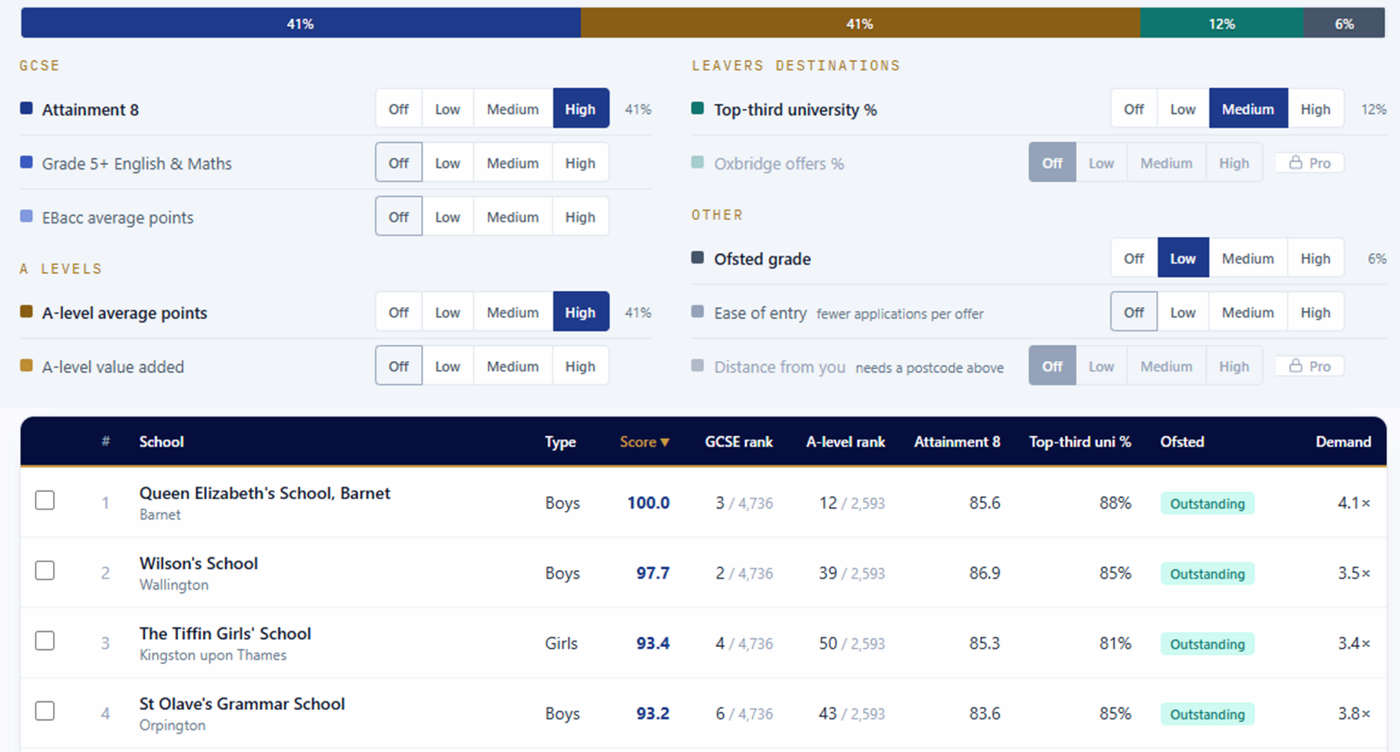
See how every school performs in the grammar school rankings league table — sortable by GCSE and A-level results, university destinations and Ofsted.

What else counts

Beyond the catchment: who else gets priority

Most grammar schools rank applicants on more than geography. Here's how common each extra priority is across all 163.

Pupil Premium91%
Sibling52%
Staff child42%
Medical / social23%
Service (forces)17%
Feeder school6%
Faith4%

Looked-after and previously looked-after children come first at every school, by law. Percentages overlap — most schools use several of these. A handful count Pupil Premium as a tie-breaker rather than a named criterion. Source: each school's published admissions policy.

“I went to a grammar school in Kent, had a wonderful time and made friends for life — I want other children to have that chance. As a parent planning a house move I couldn't find a tool that showed the real catchment boundaries rather than rough estimates, so I built one.”

Joe, founder of GrammarBound · Read my full story & the method →

Ready to go deeper?

Tier analysis, walk/drive/transit commute times, opportunity heatmaps and the full PDF report — all in one place.

Get Pro to access advanced tools